Our Research & Insights

Explore the latest in autonomous vessels and marine research platforms.

Vessel Technology

The hull starts to take shape.

By Dermot Tynan • April 1, 2013

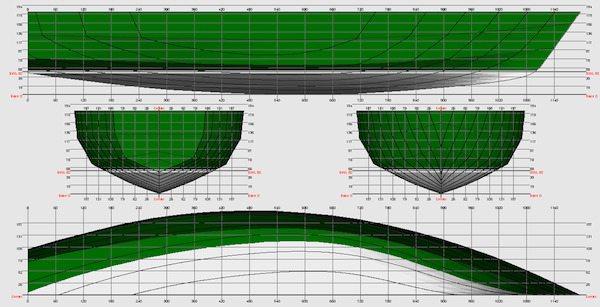
On Henry's advice, the round hull of earlier designs has been discarded in favour of a hard-chined hull. We were originally planning a fibreglass hull from a round mould. The complexities of first producing a "plug" and preparing a mould from the plug, not to mention having to then fibreglass the hull itself, are quite involved. Henry suggested hard chines an 6mm marine ply for the construction, and a light bulb lit up.
Vessel Technology

Hello to the Little Red Daemon

By Dermot Tynan • March 30, 2013

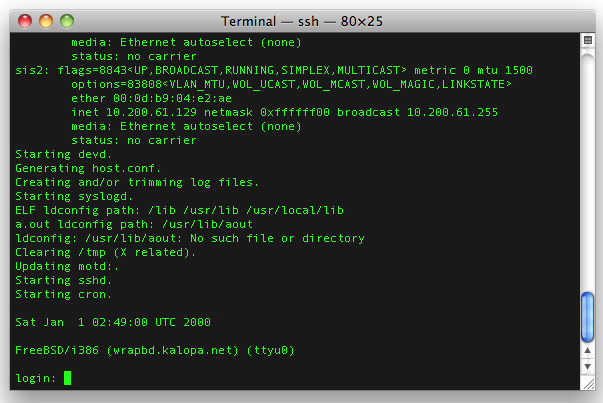
After much tweaking and hacking with configuration files and kernel build options, I finally have a FreeBSD 8.3-RELEASE kernel and install running on a Wrap board. Technically, it's NanoBSD, which is a scaled-down FreeBSD install, which boots from Compact Flash. The WRAP board is the PC Engines forerunner to the ALIX. When National Semiconductor and AMD stopped making Geode chips, the guys at PC Engines had to stop making their very popular WRAP board. I still have a few of them tucked away, for emergencies such as this.

Microtransat

Bon Voyage, Snoopy!

By Dermot Tynan • March 23, 2013

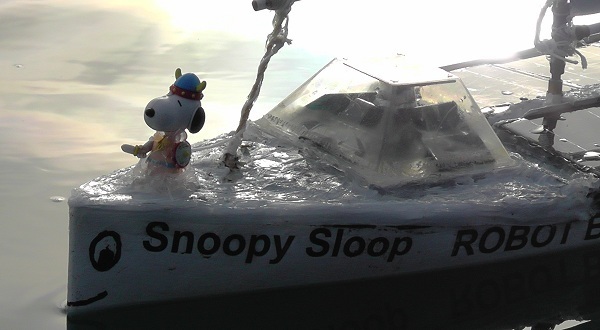
Today, March 23rd, 2013, Team Joker are planning to launch their ninth boat, Snoopy Sloop. This has been an educational (and obviously fun!) experience for Robin Lovelock and his fleet of robotic warrior boats. Here in Beoga Beag land, we wish them well.

AI & Autonomy

Of Laylines and Beats

By Dermot Tynan • March 21, 2013

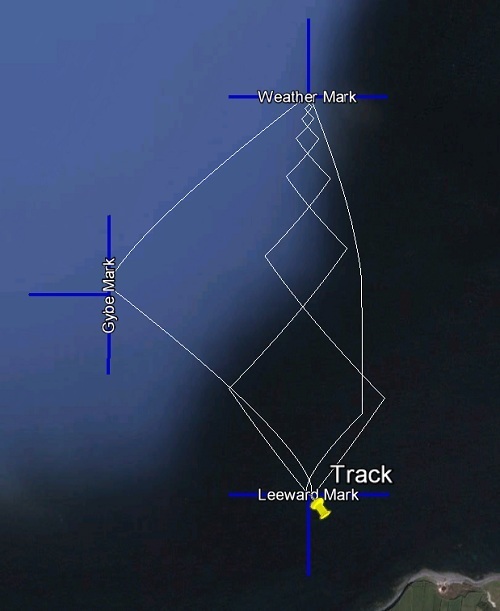
This time, I set the simulation granularity a bit smaller, so the updates are more regular and there are more data points, which explains the curved route in some cases. You can click on the image for a slightly larger version. An Olympic course is known to sailors as a "triangle and sausage", because you sail upwind to the top mark, turn onto a broad reach to the gybe mark, gybe around, and broad reach down to the leeward mark. From there you beat back up to the windward mark, and then turn dead downwind to the finish line at the leeward mark. A true Olympic course would put the start and finish line about a third of the way up the beat, shortening the first leg somewhat, but also making for an upwind finish as you would have to sail around the leeward mark and beat to the finish. I skipped all that!

Vessel Technology

Hello to the Little Red Daemon

By Dermot Tynan • March 20, 2013

After much tweaking and hacking with configuration files and kernel build options, I finally have a FreeBSD 8.3-RELEASE kernel and install running on a Wrap board. Technically, it's NanoBSD, which is a scaled-down FreeBSD install, which boots from Compact Flash. The WRAP board is the PC Engines forerunner to the ALIX. When National Semiconductor and AMD stopped making Geode chips, the guys at PC Engines had to stop making their very popular WRAP board. I still have a few of them tucked away, for emergencies such as this.